Is a Travel Agency an MLM?

- Why this question comes up so often
- What actually makes something an MLM
- The structural test: three questions to ask
- What legitimate host agency models look like
- Where the travel industry genuinely blurs the line
- How to evaluate any travel business opportunity
- The referral bonus question
- My position on this, clearly stated
- FAQ
Why This Question Comes Up So Often
Every week, on Reddit, in Facebook groups, in my DMs, someone asks a version of the same thing: "Is this host agency an MLM? Is selling travel just a pyramid scheme?"
It keeps coming up because the industry earned the skepticism. There are structures here that work like MLMs. There's recruiting language lifted straight from MLM playbooks. There are income claims that would fit right into a multilevel pitch deck. And the industry as a whole hasn't done much to separate the legitimate professional path from the ones that blur the line.
So let's answer it directly, with a simple structural test you can use on any travel opportunity that lands in front of you.
What Actually Makes Something an MLM
Multi-level marketing comes down to one structural feature: you earn income from the recruiting activity of the people below you. You recruit people, they recruit people, and you take a percentage of the fees or sales from your entire downline, including people you never met.
That cascading structure is what makes an MLM an MLM. Not that recruiting happens. Not that a business has tiers. The defining thing is that money flows up through recruiting levels, which makes recruiting the main event instead of selling an actual product or service.
A business isn't an MLM just because it has a referral program. Almost every service business rewards referrals somehow. The real question is whether that referral income is one-time and capped, or whether it cascades through level after level of recruits forever.
The Structural Test: Three Questions to Ask
When you're sizing up any travel opportunity, ask three questions.
1. Do I earn from the recruiting that people I recruit do?
If you refer someone, they join, and you collect an ongoing percentage of their fees or commissions, and they can do the same with their recruits, that's a multi-level structure. If you get a one-time bonus once the person you referred has been active for a while, that's a referral program.
2. Where does the income actually come from for the people doing well?
In a legitimate travel business, successful agents earn by booking travel. That's it. If real income depends on building a big downline of paying members, then travel is the side show and recruiting is the business. That's the MLM pattern.
3. Can I earn real money without recruiting anyone?
In a real travel agency model, yes. You build a client base, you book travel, you earn commissions, and you never have to recruit a soul. If the answer is no, or the math makes it nearly impossible to earn without recruiting, then it works like an MLM no matter what it calls itself.
What Legitimate Host Agency Models Look Like
Here's how a legitimate host agency actually works.
Independent agents pay a monthly or annual fee to affiliate. In exchange, they get the host's accreditation number, supplier relationships, commission processing, and the training and support behind it.
When an agent books a trip, the supplier pays a commission to the host, and the host passes along the agent's share based on the split they agreed to. The agent earns from booking travel.
The host earns from membership fees and its share of the split. So the host is motivated to help agents book more, because that's how everybody makes money.
There's no multi-level structure anywhere in that. Your income doesn't depend on recruiting other agents. The host's revenue comes from its own override on bookings, not from a downline. When the host signs more agents, it earns more in fees and overrides, but nobody above anybody is collecting a cascading cut.
Where the Travel Industry Genuinely Blurs the Line
I promised honesty, so here's where it actually gets murky.
Some host agencies pay recruiting bonuses that hand you an ongoing percentage of a referred agent's commissions or fees, sometimes for years, sometimes forever. Once that goes multi-level, where your recruit recruits and you still get a cut, it starts working like an MLM no matter what the company calls it.
Some "opportunities" charge a hefty upfront fee and then expect you to earn mostly by selling memberships to other people, with travel barely in the picture. That's an MLM using travel as cover.
When I researched 27 host agencies, only three put an explicit anti-MLM statement in their published materials. That tells you how seriously most of the industry takes the question. Most don't even acknowledge it.
We address it head-on at Atlas Coast, because you deserve a straight answer before you spend a dollar.
How to Evaluate Any Travel Business Opportunity
Read the contract before you sign anything. A legitimate host will show you the agent agreement before you pay a cent. If they won't show you the terms until after you've paid, that's a transparency red flag, and not just about MLM structure. We get into the details in our guide to reading a host agency contract.
Look for the word "downline." If you see "downline," "upline," "team building," or overrides taken from your recruits' commissions, start asking pointed questions.
Ask if your income depends on other people joining. Say it plainly: "Can I earn real money here just by booking travel, without recruiting anyone?" The answer tells you most of what you need to know.
Check the FTC's guidance. The Federal Trade Commission spells out the difference between legitimate network marketing and an illegal pyramid scheme, and the core test is the same one: does the income come mostly from sales to real customers, or mostly from recruiting?
Look the host up on Host Agency Reviews. Host Agency Reviews tracks reviews and keeps detailed profiles on the major hosts, and agents who've actually affiliated tend to be candid about how it really works.
The Referral Bonus Question
Atlas Coast has a referral bonus, and I want to be clear about how it's built, because referral bonuses get lumped in with MLM structures all the time and the difference matters.
Ours is a simple, one-time cash thank-you when someone you refer joins and stays active. That's the whole thing. One payment, not an ongoing cut of their commissions, and nothing that cascades. There's no structure where your recruit recruits and you keep earning off it, and no "levels." You earn nothing from anyone they go on to refer.
A one-time thank-you for a real, quality referral is how just about every legitimate service business rewards word of mouth. It isn't an MLM. You can see the current terms on our referral program page, which is always the up-to-date source.
My Position on This, Clearly Stated
The travel industry has a real transparency problem. Too many hosts hide their contracts, fuzz up their income claims, and use recruiting language that smudges the line between professional development and MLM recruitment.
I built Atlas Coast to be the opposite of that. We publish the contract before you commit, we give you realistic income expectations, and we make it structurally obvious that your income here comes from booking travel, not from building a downline.
You don't have to take my word for it. Read the contract, look at the structure, ask the questions above. That's exactly what a transparent agency should want you to do.
Atlas Coast has an explicit anti-MLM clause in our Independent Travel Agent agreement, and we're one of just three out of 27 hosts we researched to put it in writing. No downlines, no recruiting income that cascades through levels, and agents earn by booking travel. See how it works on the Why Atlas page, grab the free guide, watch the free agent webinar, and join Atlas Coast when you're ready.
FAQ
Is selling travel an MLM?
Selling travel isn't an MLM. An agent earning commissions by booking trips for clients is doing plain, legitimate business. Whether a specific host or "opportunity" has MLM elements depends on its structure, so run the three-question test above on it.
Can I recognize a travel MLM by how it recruits?
Usually, yes. Phrases like "be your own boss," "unlimited income potential," and "passive income from home," plus a heavy focus on who recruited you and what your "team" earns, show up constantly in MLM-style pitches. Legitimate hosts talk about what the actual work looks like, not what you'll make off your recruits.
What's the difference between a referral bonus and an MLM downline?
A referral bonus is a one-time payment for introducing someone who becomes a customer or member. A downline pays you an ongoing percentage of that person's activity, and often a slice of their recruits' activity too. The multi-level, cascading part is the tell.
Are all host agencies legitimate?
No. "Host agency" isn't a regulated term and the structures vary a lot, so do your homework. Check industry memberships like CLIA and ASTA, read the contract before you pay anything, and look for reviews from real agents on sites like Host Agency Reviews.
What does the FTC say about travel MLMs?
The FTC looks at whether income comes mostly from real product and service sales to end customers or mostly from recruiting fees. If most of the money in a travel business comes from selling memberships to other agents instead of booking travel for clients, the FTC's analysis would likely treat it as a pyramid scheme.
Is it possible to accidentally join a travel MLM?
Yes, especially if you skip the agreement and don't ask how income is actually earned. The single best protection is reading the contract before you pay. If they won't show it to you, don't pay.
Sources: FTC guidance on multi-level marketing (ftc.gov); Host Agency Reviews competitive analysis; industry contract research from Atlas Coast pre-launch competitive deep dive, May 2026.
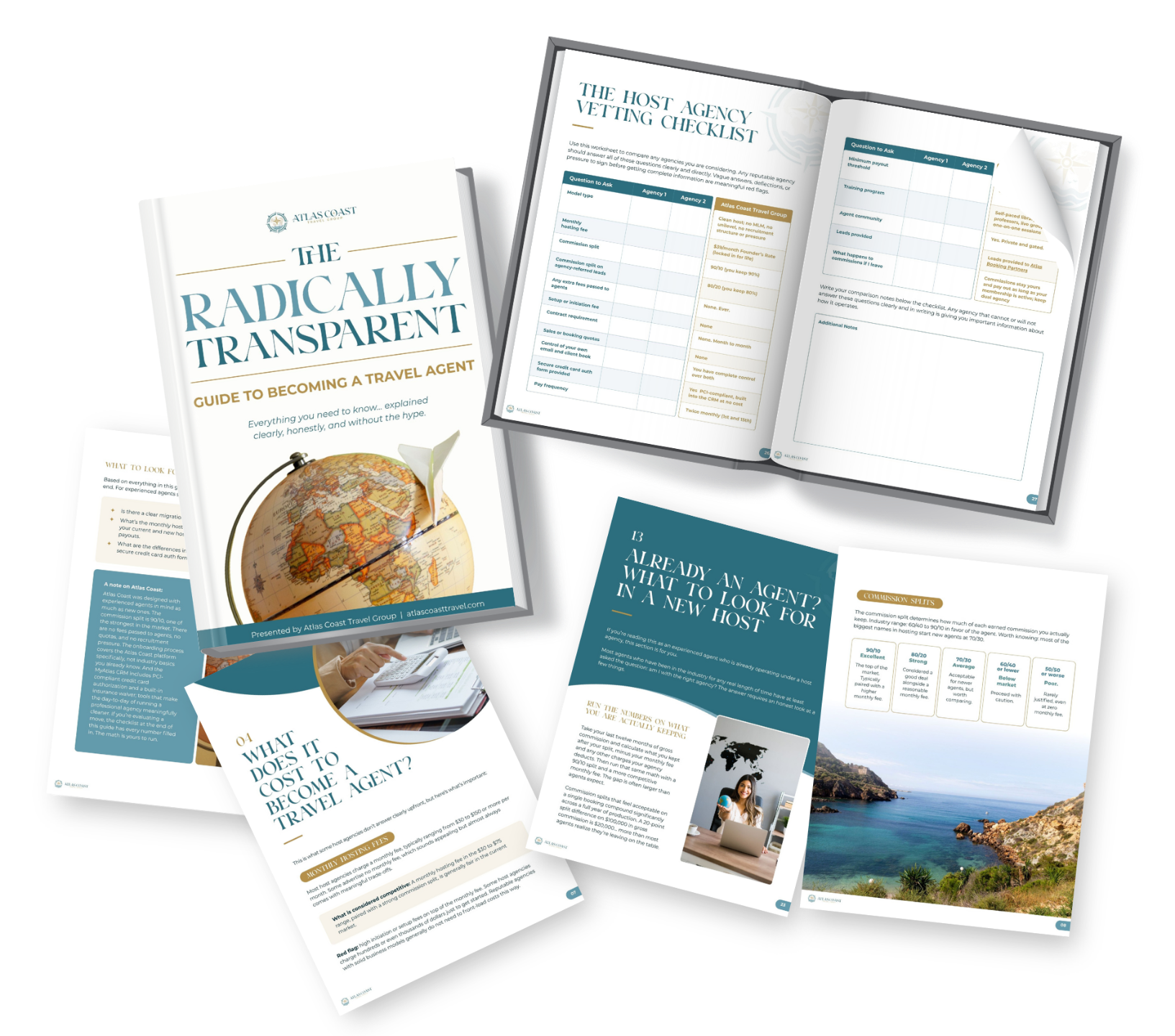
Want to know all the info about becoming a travel agent?